
Introduction
In healthy boardrooms, strategy drives conversation.
It frames debate, challenges assumptions, and anchors decisions.
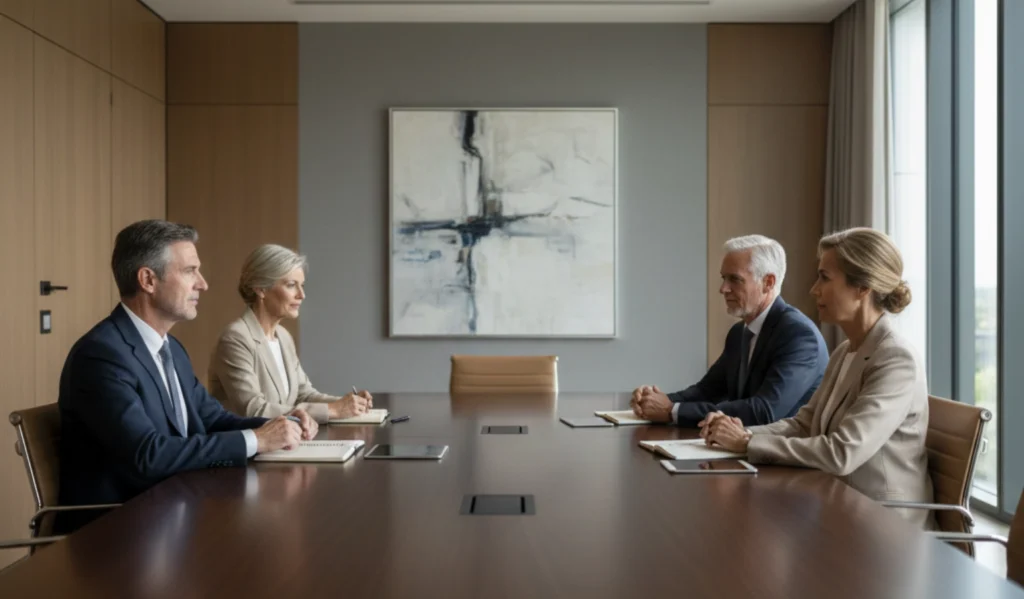
But in some rooms, strategy gradually becomes quieter—not replaced by conflict, but by comfort. The conversation continues, decisions are made, yet something essential is missing.
When strategy stops being the loudest voice in the room, boards should listen carefully.
Key Highlights
- Strategy often fades quietly before performance declines
- Repetition can replace rigorous debate
- Alignment without tension may indicate avoidance, not clarity
- Experienced boards treat silence as data, not absence
When Strategic Language Starts to Disappear
One early signal is linguistic.
Board discussions shift from:
“Why this direction?”
to
“Are we aligned?”
From:
“What assumptions are we testing?”
to
“This feels right.”
These are not wrong questions—but when they dominate, strategic depth thins.
Strategy becomes implied, not examined.
The Comfort of Repetition
Another signal is repetition.
The same priorities are restated across meetings:
- Growth
- Transformation
- Customer focus
- Resilience
Yet little changes in execution or trade-offs.
Repetition creates reassurance.
Reassurance creates calm.
Calm, unchecked, can replace clarity.
Alignment Can Drown Out Strategy
Alignment is often celebrated as boardroom maturity.
But alignment without visible tension raises a question:
Was disagreement resolved—or avoided?
In high-functioning boards:
- Alignment follows debate
- Consensus is earned, not assumed
When strategy fades, alignment becomes performative rather than productive.
Why This Happens
Several dynamics contribute:
- Fatigue after prolonged uncertainty
- Overreliance on prior success
- Deference to dominant voices
- Fear of slowing momentum
None are malicious. All are human.
But together, they soften strategic edge.
Reading Silence as a Strategic Signal
Experienced chairs and CEOs do not ask, “Why is no one speaking?”
They ask:
- What questions are no longer being raised?
- Which assumptions remain untouched?
- Where has curiosity declined?
Silence, in this context, is not absence—it is information.
What Strong Boards Do Differently
Boards that preserve strategic voice:
- Invite structured dissent
- Rotate who frames the problem
- Separate alignment checks from strategic debate
- Make assumptions explicit before decisions
They treat strategy as a discipline, not a mood.
Closing Thought
Strategy rarely disappears overnight.
It fades through comfort, speed, and familiarity.
When strategy is no longer the loudest voice in the room, the board’s role is not to amplify noise—but to reintroduce thoughtful friction.
Because clarity is rarely silent.